Interview with NYTimes Bestselling Sensation (And Cool Girl) Maggie Stiefvater!!

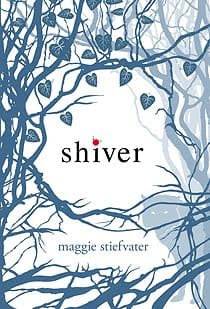

Okay, so, when I went to New York with my Decatur Book Festival pals back in April to meet with publishers and try to convince them to send authors and illustrators down to Decatur for Labor Day weekend, the publicists at Scholastic threw this advance reader at me called Shiver. I had just told them about my idea to maybe have a Vampires vs. Werewolves smackdown–an audience-participation discussion about which books were better–and their eyebrows had gone half up their heads. They had just gotten these advance copies. They were really excited.
I, however, was not. I was happy to have a possible author for my smackdown of course, but it’s no secret that I’m not the biggest fan of vampire-, werewolf-, unicorn-, elf-, faerie-or-any-other-magical-creature books. (There are of course exceptions. Stephen King’s The Talisman is one of my favoritist books ever, and also I love love love Winter’s Tale by Mark Helprin.) But this I started reading out of obligation. (I couldn’t invite an author whose book I hadn’t read, after all.)
About two paragraphs in, my scalp started to tingle.
Two pages in, and I was completely hooked (and half in love).
390 pages after that I was sad the book had ended, and I couldn’t wait to share it with my friends at Little Shop of Stories.
Could.
Not.
Wait.
I also really, really, really couldn’t wait to meet Maggie Steifvater. And that was way before she hit the New York Times bestseller list in the #3 spot.
So in prep for her arrival (in 8 1/2 days!!!!) I thought I’d ask her some questions so that we could get to know each other a little more. Here is what she had to say:
So, why werewolves?
Well, it’s not so much why werewolves as why wolves. I’m not a big fan of the whole drooling, shedding, slavering half-man, half-beast thing, but angst-because-you-are-a-human-trapped-in-another-form? Oh I am all over that. Werewolves just happen to be an already existing convention. I like to tap into existing folklore when I can; I think old myths and archetypes speak to people on a subconscious level.
On your website you claim to make great cocktail party conversation. What are some of the great conversations you’ve been in at cocktail parties as of late?
Well, this is not really a cocktail party, but I was at a library the other day chatting with one of the librarians, talking about my awful experience when I first starting using google alerts. I set up one for ‘shiver scholastic.’ Because of course my book is called Shiver. And it’s published by Scholastic. You know what else is published by Scholastic? Harry Potter. You know what else is written about Harry Potter? Fan fiction. You know what’s a sort of fanfiction that pairs two characters that never got together in the book? Slash. You know what they write at the end of HP fan fiction? Character property of Scholastic. You know what Snape does when he first sees Harry in an entirely new light, now that he’s taken his pants off? Shiver.
Do I need to elucidate further?
It only took me a day of getting these personally delivered into my inbox to both modify that google alert to include my name and also to seek therapy for what I had seen.
Everyone’s got their teen obsession these days. When you were a teen, what were you obsessed with?
Um. The IRA. Don’t ask me why. I still remember checking out Tim Pat Coogan’s The Troubles from the library and sitting in the car reading the introduction while my mom drove us home. I was . . . fascinated. I’m not sure why. Possibly because it was so angsty. It was a problem of idealistic, mythic proportions, full of angst (see the pattern here). Anyway, it became an obsession. I read just about every book on it, even up through college, wrote three really bad (and really melodramatic) IRA thrillers, and bought Irish papers every week to see if they’d come to an agreement yet, while better one whether or not it would last.
I mean, I had other obsessions, like bagpipes (I practiced two hours a day and competed), medieval illuminated manuscripts (I spent hours doing calligraphy and actually taught it for awhile during college), and horses (we had three). But I think the IRA one is the weirdest.
One of the things I like most about Shiver is that the romance is truly romantic. Care to share any majorly romantic moments in your life?
Well, me and my husband . . . we have an interesting relationship. I think it’s very romantic, but some people just call it weird. We met when I was 19 and were engaged a month and a half later. Anyway, at the time I was just finishing working at a touristy downtown store called the Made in Virginia store — we sold Virginia stuff like hams, and hot sauces, and tiny rubber lucky piggies. Anyway, to commemorate my leaving — I’d worked there for years — I brought in my camera and staged a war between the hot sauces and the lucky pigs, using the toy rifles and cannons and other Civil War memorabilia. My husband — then brand new boyfriend of just a few days — came in and helped me stage various battle scenes and photograph them. I thought it was very romantic. Possibly because he took it all in stride that this was just what girls did.
If you had to choose between giving up music, writing, reading or drawing, what would you pick and why?
Drawing. I wouldn’t be happy about it, but I could do it. Music and writing/ reading, though? (I think writing and reading are the same, you can’t do one without the other in my mind) I couldn’t do it. When I go on travel for a few days and don’t have my music, it makes me feel . . . I don’t know how to describe it. Tired. I don’t realize how drained I am without music until I have it again. And writing — I can’t not write. I have to. It’s a way to process the world.

Shiver is not your first book. How does this one compare, for you, to your first one, both in terms of how the writing went, and also in terms of how it’s been having it out there in the world?
Um, insane. I knew that it was better than my first one — or at least, more me — but I hadn’t even begun to hope it would do this well. Honestly, my editor said “Shiver has a charmed life. Everything you want for a book, this book gets.” And that’s how it feels. Everything I dreamed about as a teen writer, it’s happening. I’m profoundly glad that it’s not my first book, so I can savor just how absolutely bizarre and wonderful this is.
You are incredibly smart about writing and the process of it and doing it well. Who is a writer from the past whom you’d most like to go to for some wisdom or advice (or even just for a comforting pat on the back)?
*blush* Thanks. I feel I still have so much to learn. And some novels still humble me so much — in a good way — when I read them. But a writer from the past? Yeats. I loved Yeats so much as a teen, still do, and he blends a sort of modern angst (there it is again) with a nostalgic sense of folklore. I would say: “Mr. Yeats, you make EmoPet sound so good. How? How!?” For novels, I would like to sit down with Audrey Niffenegger (technically this is still possible as she is quite alive), and just have coffee with her and chat about character development and language.
Does your drawing ever help your writing? Your writing help your drawing?
Help? Hmm, I don’t think so. Just scratches a different part of my itchy creative brain.
I’ve had a couple of discussions lately with YA readers about fantasy fiction vs. reality-based fiction, and what the strengths and weaknesses are of both. Care to chime in?
Hm. I don’t really think it’s a valid distinction, if we’re talking about a novel of either variety that has been done exquisitely. The goal of any good fiction is to engage the reader and make them feel the experiences of the characters on a deep, personal level. When you put it that way, whether it includes paranormal aspects or not is like whether or not it’s set in Cleveland. Reality is just another device to be toyed with by the author as a means to an end. You make you reality. I just think your characters need to be as human as possible. The rest will sort itself out if you make your people real.
(Terra nods her head extremely enthusiastically to this answer.)
Thanks to blogging and the internet there’s a lot of extra “stuff” that an author can do and sometimes has to do for the sake of his or her book. Can you talk about how you make room for that part of the job, on top of working on your books?
Honestly, it gets overwhelming, the sheer number of e-mails and interviews and blogging and facebook and . . . you do what you can, I think, and you do it in a way that suits your personality. So because I’m very conversational and informal, blogging and facebook work well for me. Someone more formal might skip the facebook and just do article-type blogging. Someone who dislikes blogging might do just interviews/ blog tours. I think the imporant thing is to think of the online world as a community where you’re making friends and allies and generally fitting in, instead of as marketing. Because it would be easy to come off odious. Also, I am slowly learning to say “no.” Also “not now.” Because after awhile, yes, it does get to be too much. And it is not writing. And writing is the most important thing.
So if you had to become a faerie, a vampire, a werewolf or a person who mucked out unicorns’ stalls, which would you choose and why?
The person mucking out the unicorns’ stalls. Because if readers learn nothing else from my novels, let it be this: it is always better to be watching the supernatural instead of BEING the supernatural. To be the magical thing makes it ordinary. To merely witness it? Extraordinary.
Just like, um, witnessing Maggie Stiefvater is pretty extraordinary, I think. You can catch her on The Escape stage (at Several Dancers Core) with Richelle Mead on Saturday, September 5th at 2:30. (She is also going to be at Dragon*Con Saturday night at 8:30 PM!)